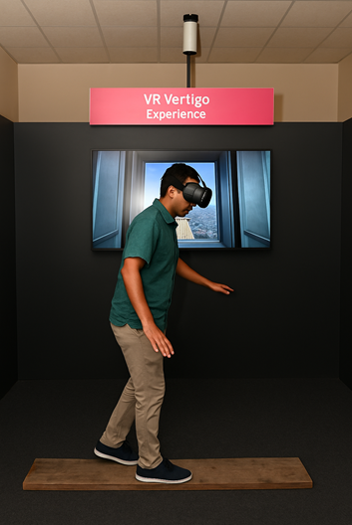
The R&D team has created an in-house VR Vertigo Experience tailored for heavy museum use. Unlike commercial VR, it offers precise virtual-to-physical mapping, integrated safety, multi-user reliability, and an easy operator interface. Visitors ride a virtual elevator to a skyscraper-top plank that aligns with a real wooden plank, followed by a controlled free-fall simulation that powerfully triggers fear and balance responses. This custom system provides a stable exhibit and a platform for research on perception, fear, and immersive learning.
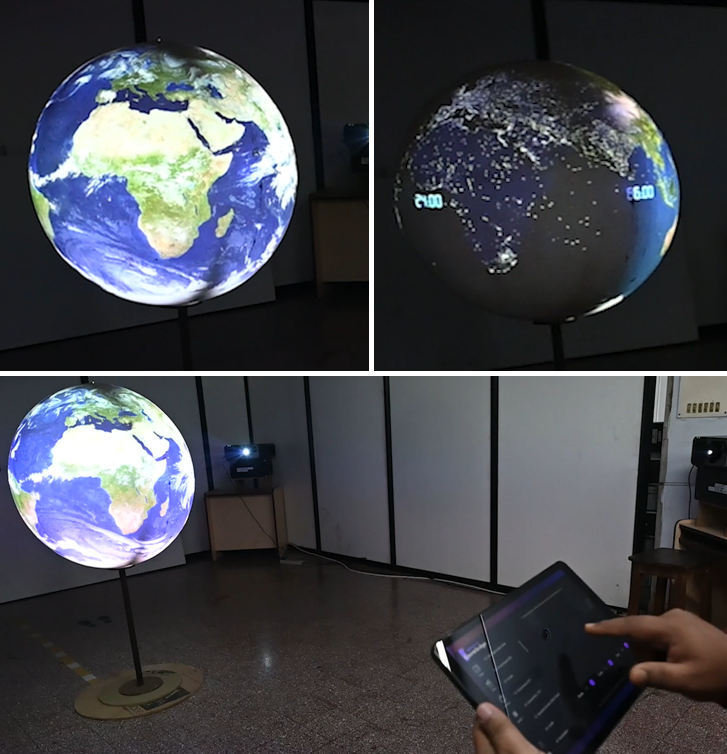
The R&D team has developed Knowledge on Sphere a cost-effective, geometry-corrected spherical projection system built as an indigenous alternative to NOAA’s Science On a Sphere, at about one-fourth the cost. Using four projectors with digital masking and Unity-based mapping, it enables seamless real-time visualization of scientific and geospatial datasets, with control via kiosk or wireless tablet. Optimized for standard hardware, it offers an affordable, scalable solution for museums and learning spaces. A full system is already installed at the Regional Science Centre, Bhubaneswar.
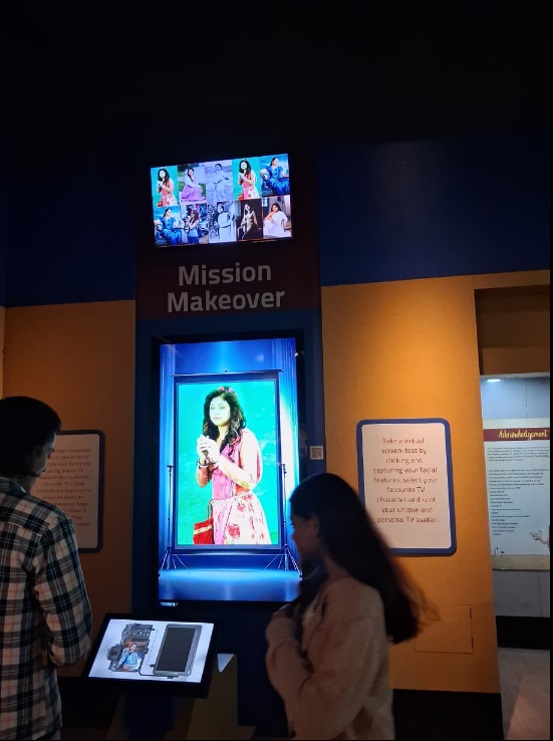
An AI-powered interactive exhibit titled Screen Test has been developed for the Television Gallery at BITM. Drawing inspiration from the traditional screen test process used in the television industry, the exhibit enables visitors to capture their facial images and digitally replace them with characters from iconic TV serials. Using advanced face-mapping and image synthesis algorithms, the system allows users to visualize themselves in various television roles, providing a playful yet insightful experience into the art of casting and character adaptation. This innovative exhibit not only enhances visitor engagement but also demonstrates the creative applications of AI in media interpretation and public interaction.
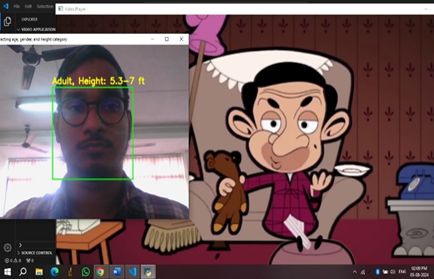
A display technology system has been developed to deliver customized, age-appropriate content to both adults and children, enhancing engagement through tailored experiences. Designed for deployment at the IME 2024 exhibition, the system features adaptive content logic that dynamically responds to user interaction—ensuring that each visitor receives relevant information suited to their cognitive level and interests. The interface intelligently distinguishes between adult and child users through intuitive inputs and presents distinct content streams in a visually appealing and accessible format. This innovation advances personalized science communication in exhibition environments and supports inclusive, multigenerational learning.
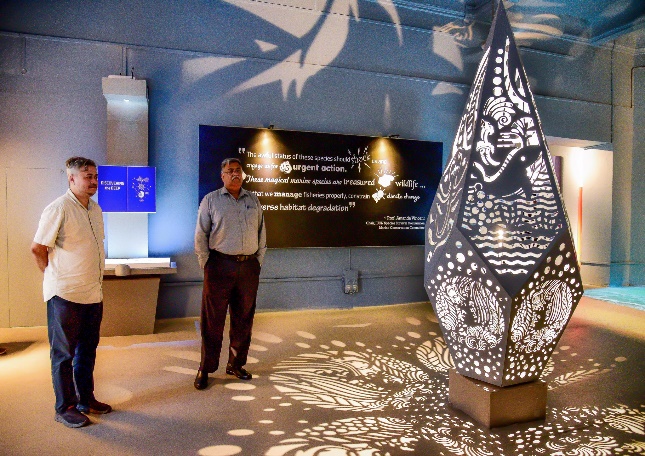
“Lost at Sea” is a captivating 360-degree panoramic projection experience installed at the Birla Industrial & Technological Museum (BITM), Kolkata. This immersive installation plunges visitors into the dramatic world of maritime exploration and peril. Surrounded by an enveloping oceanic environment, viewers journey through the gripping tale of a vessel lost to the sea encountering turbulent storms, fading signals, and the haunting silence of the deep. The experience integrates scientific insights on ocean currents, marine ecosystems, and navigation technology with real-life accounts of shipwrecks and survival. Designed to engage, educate, and emotionally connect, Lost at Sea not only showcases the might of the oceans but also highlights the fragility of life and the importance of maritime knowledge in our interconnected world.
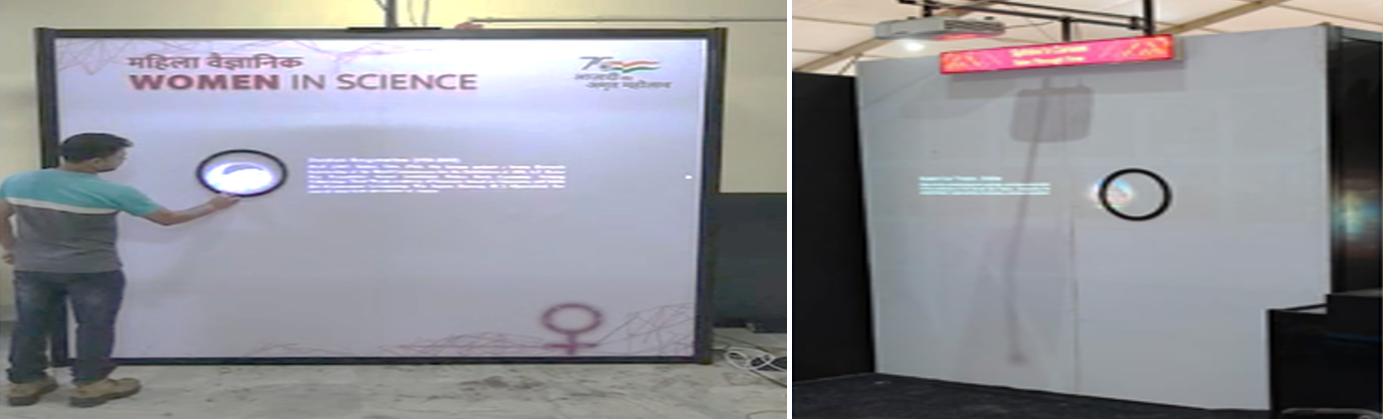
Sphinx's Canvas invites visitors to uncover history by transforming a simple white wall into a living storyteller. Guests take a magnetic black circular frame and place it anywhere on the wall, guided purely by curiosity. The moment the frame touches the surface, the enclosed region lights up with a carefully curated video of an archaeological site, revealing its story. Each new placement opens a different chapter, creating a dynamic, non-linear exploration of India’s cultural heritage.
The underlying technology is an innovative combination of physical interaction and intelligent image processing. A camera continuously observes the wall and detects the position of the magnetic frame using custom software. Once the system identifies the frame’s coordinates, it projects a video exactly inside the circular boundary, giving the impression that the wall itself is narrating the story. This technique blends physical play with digital storytelling, allowing museums to present complex historical narratives in a simple, intuitive, and highly engaging format.
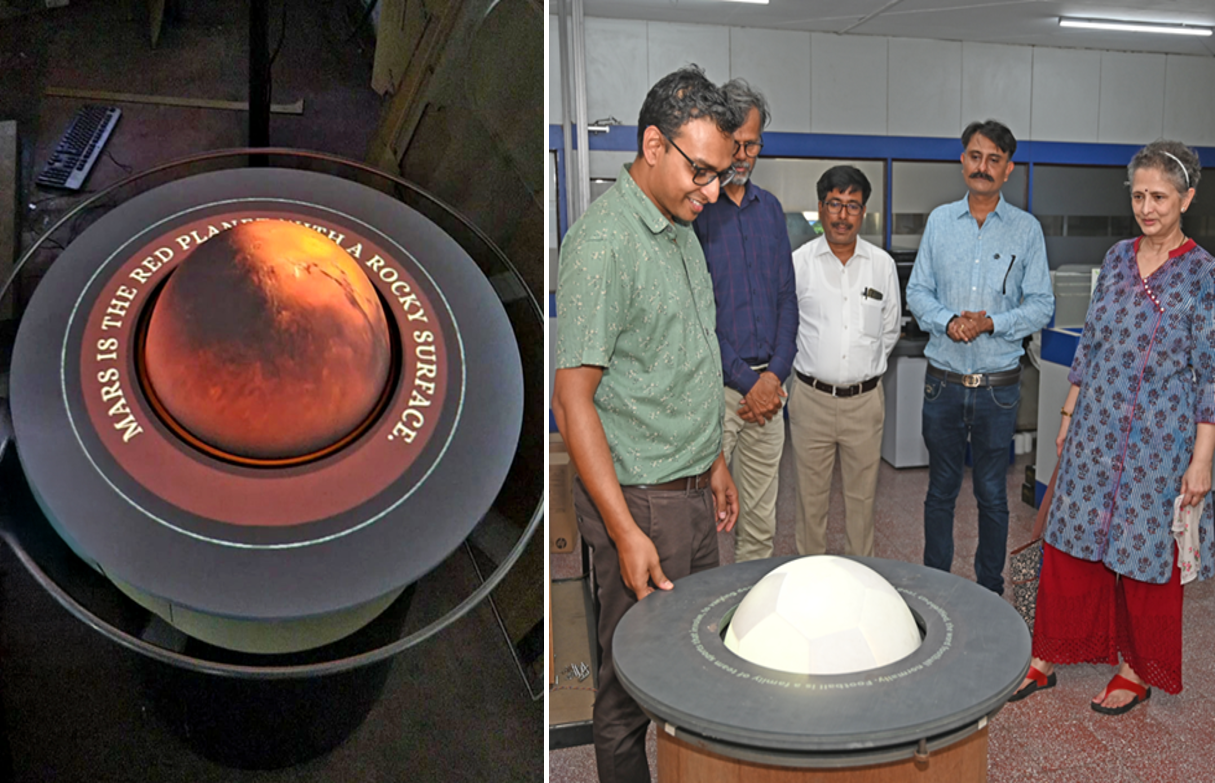
The Spherical Display Table is a custom-built system that projects content onto a real sphere with accurate geometry and distortion correction. Users can rotate the sphere with a handle, and the visuals move in sync for an intuitive, hands-on experience. Ideal for exhibits like planets, Earth systems, or any spherical subject, it offers museums an affordable, high-engagement alternative to commercial spherical displays.
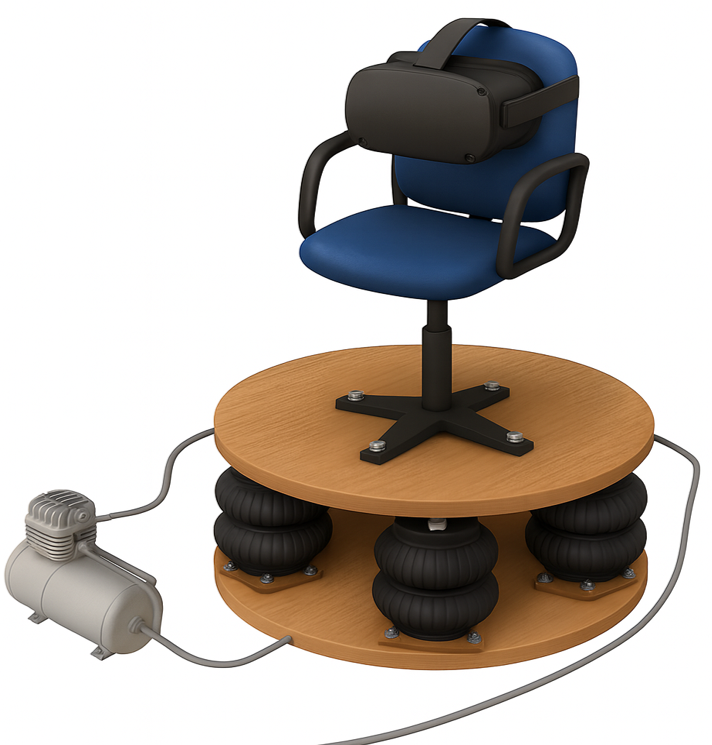
CRTL has developed an indigenous, ultra–low-cost three-degree-of-freedom VR motion chair that integrates synchronized motion, server-controlled content management, and a fully in-house hardware–software ecosystem.
Powered by three pneumatic actuators, the system delivers smooth pitch, roll, and heave movements that precisely match the VR visuals. A custom server can run VR content across more than a hundred chairs simultaneously while still allowing each unit to operate independently with its own selectable experience and motion profile.
Entirely engineered and fabricated at CRTL from mechanics and pneumatics to electronics, firmware, and software the chair delivers performance comparable to commercial systems at roughly one-fifth the cost, reinforcing CRTL’s commitment to sustainable, high-quality, low-cost museum technologies.
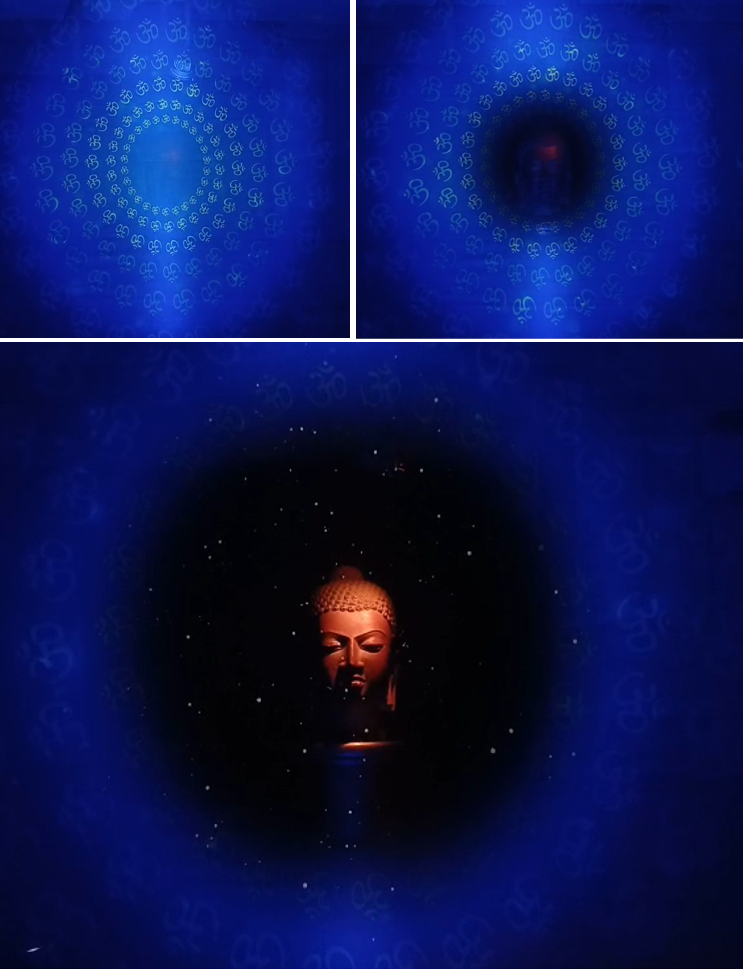
CRTL has developed an indigenous transparent projection display that seamlessly blends real objects with dynamic digital overlays. It uses a custom fine-mesh projection surface inside a controlled black enclosure, paired with synchronized lighting to switch between two modes: an opaque projection mode for high-contrast visuals, and a transparent reveal mode that illuminates the object behind the mesh. A slanted top surface prevents reflections, ensuring clean optics. This hybrid setup enables museums to present artefacts with layered storytelling and scientific context in a compact, efficient installation. A prototype has been built and tested at CRTL, with further refinement toward a patentable version underway.
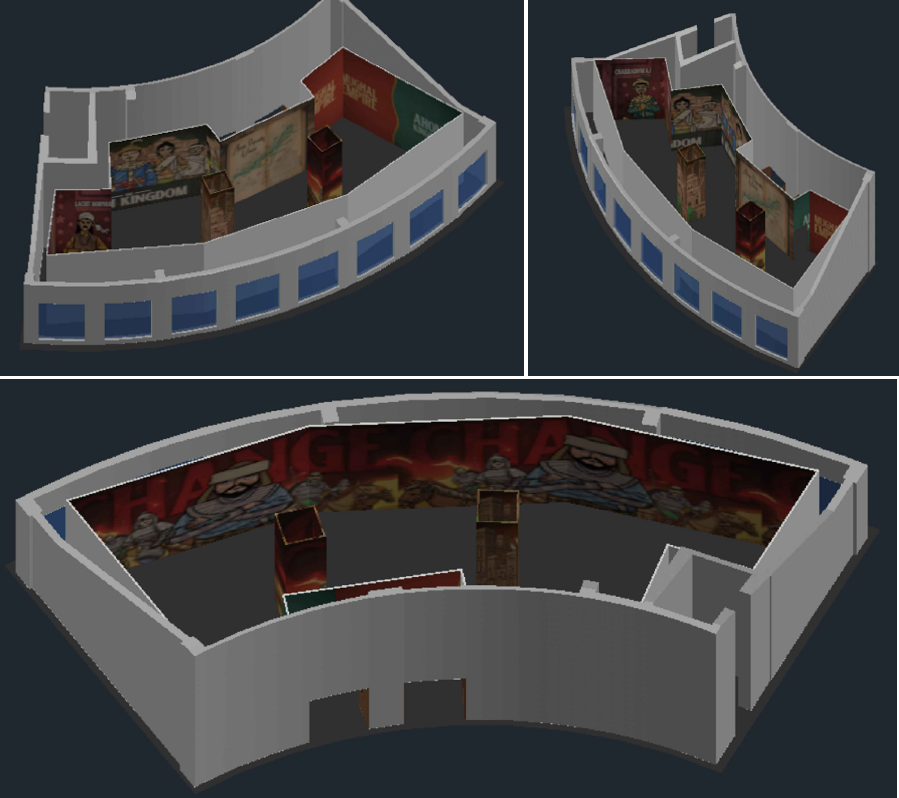
CRTL has developed an indigenous 360-degree projection room that replaces costly licensed show-control systems with a fully in-house hardware-software solution. A custom hardware module handles all screen stitching and edge blending, achieving precise alignment and seamless visuals without commercial blending engines. A robust server–client architecture synchronizes high-resolution content across all projection surfaces, while custom software manages distribution, timing, playlists and real-time monitoring. The result is a scalable, low-cost and sustainable immersive environment for museums and science centers, free from dependence on proprietary systems.
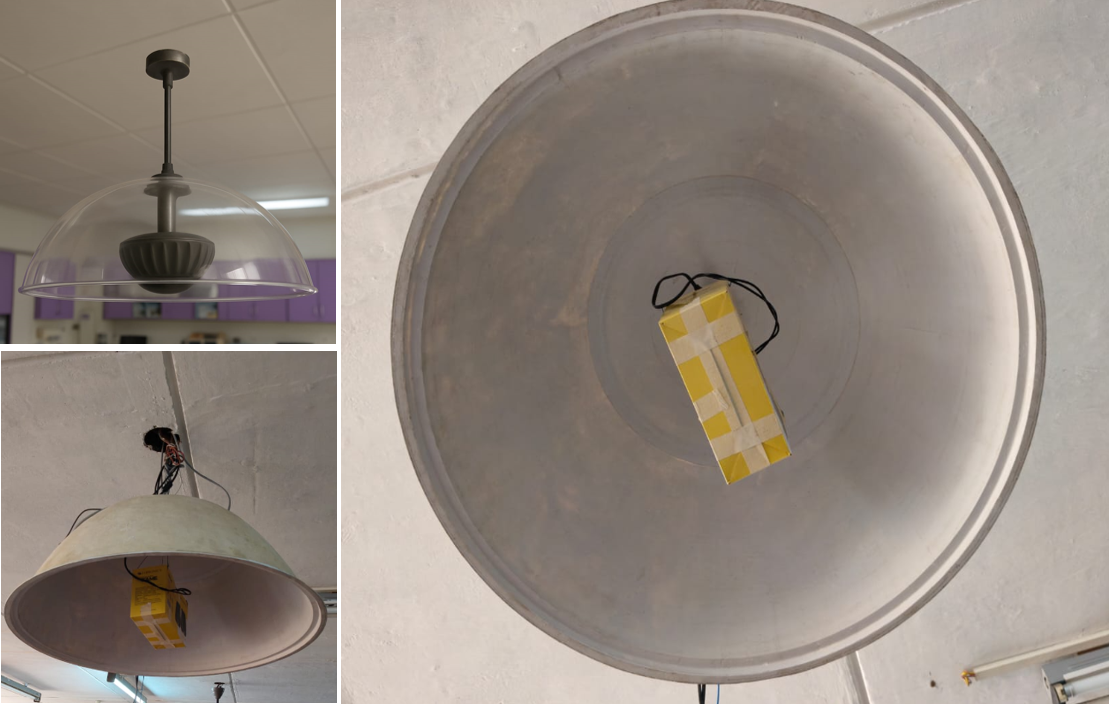
A low cost directional audio system is proposed for museum applications using a hemispherical dome and a pair of stereo full-range speakers. In the current prototype, we have already achieved a successful test run using an acrylic dome, where the speakers mounted near the top of the dome reflect sound downwards to create a focused “sound shower” zone. This arrangement concentrates audio directly beneath the dome while minimising spill over to nearby exhibits, offering an economical alternative to ultrasonic or beamforming speakers. The project aims to refine dome geometry, optimise speaker placement, and evaluate sound isolation and visitor clarity, ultimately delivering a reproducible, low-budget directional sound solution suitable for open gallery environments.
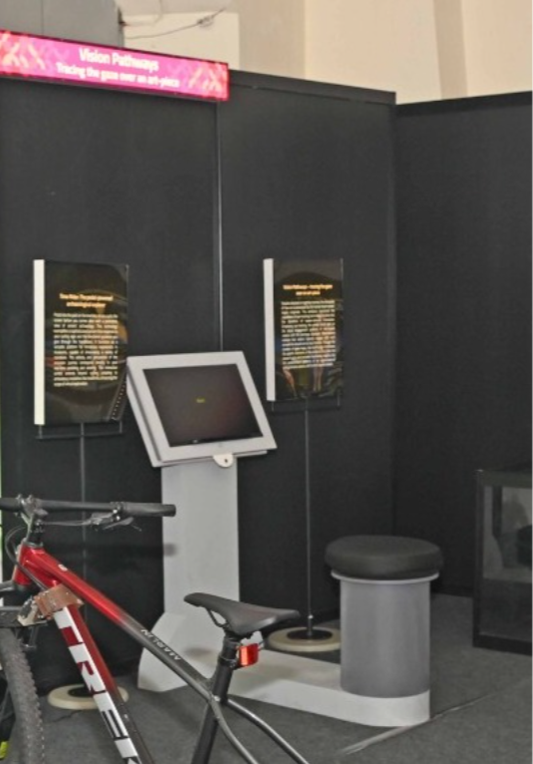
Despite advances in cognitive science, the intricacies of how art is processed by the human brain remain largely enigmatic. This exhibition harnesses the capabilities of eye-tracking technology to delve into the dynamics of viewer-artwork interaction. Employing eye-tracking, the exhibit sheds light on the visual engagement patterns of non-expert visitors with the paintings displayed. Observations indicate that visitors typically engage with each artwork for around one to two minutes. Through the creation of gaze maps, this technology illuminates the specific elements of the artefacts that draw the viewer's gaze and provides fascinating insights into the predominant patterns of art appreciation.
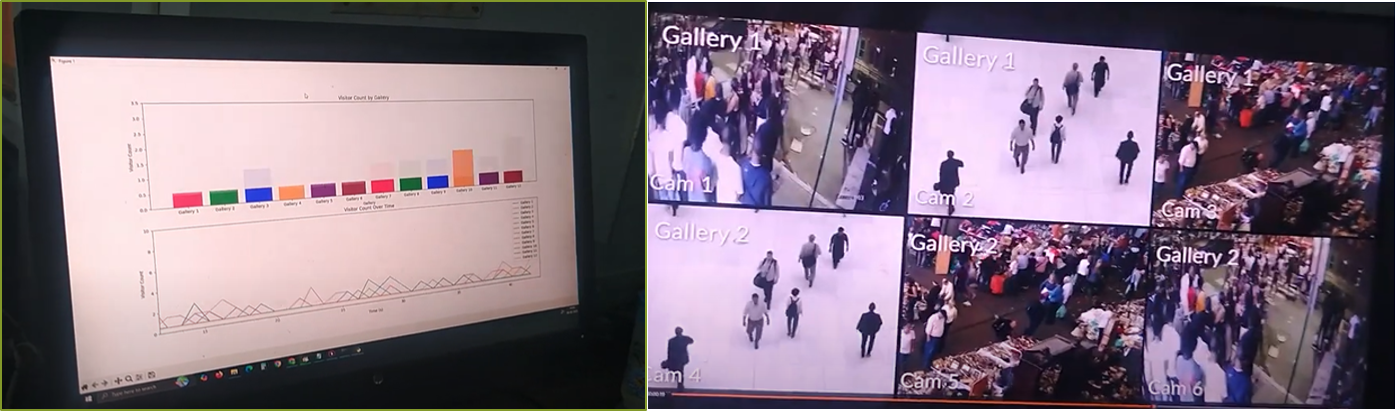
An AI-powered, non-intrusive system has been developed to enhance exhibit evaluation and visitor behavior analysis using existing CCTV infrastructure. The system integrates YOLOv5 for real-time person detection, Media Pipe for pose estimation, and Deep SORT for tracking, enabling the generation of heat maps, dwell time analytics, and movement flow patterns across museum galleries. By analyzing screen-captured CCTV feeds rather than backend systems, the solution maintains security integrity while ensuring ethical, anonymized data handling. Environmental conditions are dynamically adjusted based on real-time visitor density through NodeMCU-based microcontrollers controlling air-conditioning and lighting systems. A React–Flask dashboard provides staff with real-time insights into visitor distribution, engagement levels, and environmental parameters. This system offers a cost-effective, scalable, and intelligent approach to museum operations and exhibit optimization.


 Screen Reader Access


